
Wild Encounters: Wildlife Viewing in Saguache County
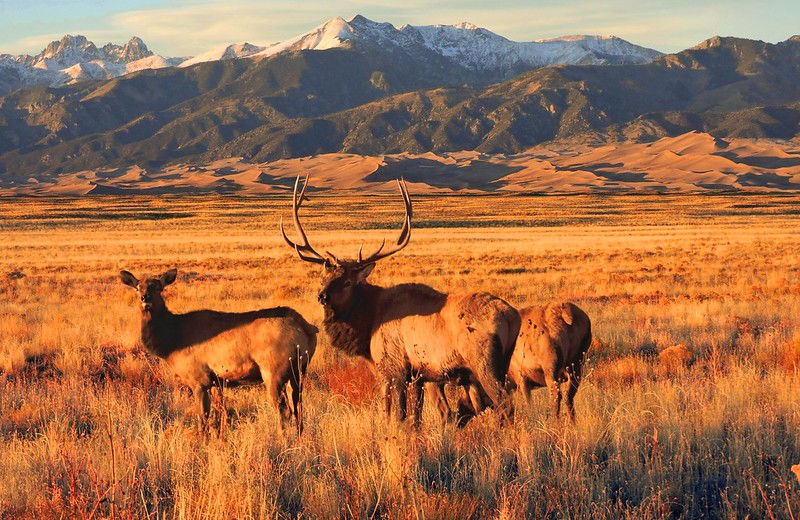
From wide open grasslands to alpine peaks, Saguache County offers some of Colorado’s best opportunities to see wildlife in its natural habitat. Whether you are driving a scenic backroad, hiking a mountain trail, soaking in one of the beautiful natural hot springs, or simply watching the sun set over the valley floor, there is always the chance of spotting something wild.
The county’s diverse landscapes, including sagebrush flats, wetlands, forests, canyons, alpine tundra, and the high mountain forests support an impressive variety of animals. Wildlife viewing here is not limited to remote wilderness. Visitors often encounter animals in surprising places, like the edges of our small towns.
Where Can You See Elk in Saguache County?

Elk are among the county’s most iconic animals and one of the easiest large mammals to spot. While many spend summer and fall in mountain meadows, forest edges, and high valleys in the Sangre de Cristo and San Juan mountains, visitors are often surprised to learn there are also herds that roam the valley floor.
One of the best places to view elk is the Baca National Wildlife Refuge and surrounding open country, especially during early morning and evening hours. Wetland and grassland habitat around Russell Lakes State Wildlife Area can also offer rewarding wildlife viewing opportunities. In the high country near Sargents or Bonanza, visitors may spot elk, mule deer, and other mountain wildlife in forest openings, mountain meadows, and creek corridors, particularly at dawn and dusk.
Fall is an especially exciting time to visit Saguache County, when bull elk enter the rut and their haunting bugling calls echo across the landscape.
What Other Large Wildlife Can You Spot?
Mule deer are common throughout the county and are often seen near fields, foothills, and brushy draws at sunrise and sunset. They are also frequent visitors in local communities, quietly moving through neighborhoods and open spaces in the cool hours of morning and evening.

Pronghorn, often mistakenly called antelope, thrive in the valley’s wide-open grasslands. They are the fastest land mammal in North America, capable of speeds over 50 miles per hour. Spring through fall offers excellent viewing opportunities around Villa Grove, Moffat, Saguache, La Garita, and across the northern valley floor.
Patient wildlife watchers may occasionally catch sight of bighorn sheep navigating steep rocky terrain in the more rugged mountain areas of Saguache County. These sure-footed animals are well adapted to cliffs, talus slopes, and alpine landscapes, where their camouflage and agility help them avoid predators.

Even more elusive are moose, which have slowly expanded into parts of southern Colorado in recent years. Though still relatively uncommon in the San Luis Valley region, moose are sometimes found in higher elevation willow thickets, wet meadows, and forested creek corridors within the county. Spotting either species is always a memorable reminder of the wild and untamed character of the region.
What Smaller Wildlife Lives Here?
Not all exciting wildlife encounters are with large animals. The rocky landscapes surrounding Penitente Canyon are rich with wildlife. Coyotes are commonly seen crossing open fields at dawn and dusk, while red foxes occasionally appear near farmland, creek corridors, and even along the outskirts of town. Bobcats also call Saguache County home, though their secretive nature makes them one of the county’s rarer and more thrilling sightings, often glimpsed slipping quietly through rocky draws, brushy cover, or canyon edges. Wetland areas may reveal industrious beavers building dams that expand habitat and create homes for countless other species.

At higher elevations, such as the mountain country near Sargents and the rocky outcroppings near the Middle Fork of Saguache Creek in Saguache Park, hikers may hear the sharp whistle of the yellow-bellied marmot, affectionately nicknamed the “whistle pig.” These alpine mammals spend their brief summer eating almost nonstop, building fat reserves for a long winter hibernation in harsh mountain conditions.
The broader San Luis Valley landscape also supports more than 250 bird species, from soaring bald and golden eagles to hummingbirds, hawks, owls, turkeys, and colorful mountain songbirds.
Wildlife Where You Least Expect It
Some of the best wildlife viewing in Saguache County happens in unexpected places. Local hot springs, with their quiet natural settings and nearby water sources, can attract birds, deer, foxes, and other wildlife, especially during early morning and evening hours.

Even the county’s small towns are part of the wildlife landscape. Mule deer and foxes are not uncommon sights. And above the historic Saguache County Courthouse, turkey vultures can often be seen soaring on warm afternoon currents, a familiar and uniquely local sight.
Wildlife Awareness and Staying Safe
Saguache County is home to black bears, mountain lions, rattlesnakes, and other wildlife that deserve respect, though serious encounters are rare.

Black bears are generally shy and prefer to avoid people. Problems usually happen when bears find easy food around campsites or homes. Store food securely, keep camps clean, and never feed wildlife.
Mountain lions are even more secretive. Encounters are extremely uncommon, but if you do see one, stand tall, make eye contact, make noise, and never run.
Visitors should also be aware of prairie rattlesnakes, which are native to the region and may be found in dry, rocky areas at lower elevations and across parts of the valley floor, especially in warm weather. They may also shelter in or around prairie dog colonies and other rodent burrows, which provide cool refuge from the heat and places to hunt prey. Stay on trails when hiking, watch where you place your hands and feet around rocks or brush, and keep dogs close in snake habitat.
Badgers also deserve respect. Though smaller, they are powerful diggers with sharp claws and can defend themselves fiercely if cornered.
With all wildlife, admire from a safe distance and maintain effective control of your dogs.
What Are the Best Wildlife Viewing Tips?
The best wildlife viewing happens at dawn and dusk, when animals are most active. Bring binoculars, keep noise low, stay in your vehicle when appropriate, and always give animals plenty of space. Never approach wildlife for a photo and always maintain effective control of your dogs.
The best sightings often happen when you least expect them, so always be prepared.
Frequently Asked Questions
What wildlife is most common in Saguache County?
Elk, mule deer, pronghorn, coyotes, foxes, marmots, and a wide variety of birds are commonly seen throughout the county.
Where is the best place to see elk?
The Baca National Wildlife Refuge and nearby valley grasslands are excellent places to look, especially at sunrise and sunset.
Are bears common in the San Luis Valley?
Black bears live primarily in mountain habitats and generally avoid people, but visitors should always practice safe food storage while camping.
Photo Credits: Images courtesy of Great Sand Dunes National Park and Preserve, and Dandelion Creative Services.


Comments